Collector's Edition
The Oracle Speaks
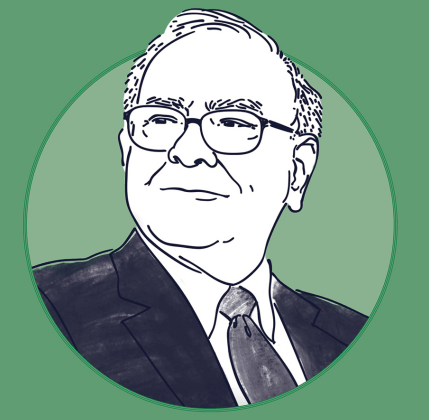
The Oracle Speaks: Warren Buffett in His Own Words is a comprehensive guidebook to the inner workings of the Berkshire Hathaway chairman. Hundreds of Buffett's best quotes, comprising thoughts on investing, Wall Street, business, politics, taxes, and life lessons, will provide the most intimate and direct look into the mind of a modern business icon and give readers enough counsel to last a lifetime.
348
Total quote cards in this archive.
4
Themes to skim quickly through the collection.
12
Cards per page for a calmer, gallery-like reading pace.
Archive Cabinet
The new layout adds stronger spacing, clearer hierarchy, and a more premium paper-card feel while keeping the reading experience focused and uncluttered.
No. 001
English
WHEN I BUY a stock, I think of it in terms of buying a whole company just as if I were buying a store down the street. If I were buying the store, I’d want to know all about it.
No. 002
English
IN THE INVESTMENT world, if you had a punch card when you got out of school, and there were only 20 punches on it, and when that was done, you were all done investing, you’d make more money than having one with unlimited punches. You’d make sure you used them for the right things.
No. 003
English
I CALL INVESTING the greatest business in the world, because you never have to swing. You stand at the plate, the pitcher throws you General Motors at 47! U.S. Steel at 39! And nobody calls a strike on you. There’s no penalty except for the opportunity lost. All day you wait for the pitch you like; then when the fielders are asleep, you step up and hit it.
No. 004
English
TED WILLIAMS DESCRIBED in his book, The Science of Hitting, that the most important thing — for a hitter — is to wait for the right pitch. And that’s exactly the philosophy I have about investing. Wait for the right pitch, and wait for the right deal. And it will come. It’s the key to investing.
No. 005
English
GAME S ARE WON by players who focus on the playing field — not by those whose eyes are glued to the scoreboard. If you can enjoy Saturdays and Sundays with out looking at stock prices, give it a try on weekdays.
No. 006
English
DEGREE OF DIFFICULTYcounts in the Olympics; it doesn’t count in business. You don’t get any extra points for the fact that some thing’s very hard to do, so you might as well step over one-foot bars rather than try to jump over seven-foot bars.
No. 007
English
The best way to think about investment s is to be in a room with no one else and to just think. If that doesn’t work, no thing else is going to work.
No. 008
English
SUCCESS IN INVESTING doesn’t correlate with IQ once you’re above the level of 25. Once you have ordinary intelligence, what you need is the temperament to control the urges that get other people into trouble in investing.
No. 009
English
WHAT WE DO is not beyond anybody else’s competence. I feel the same way about managing that I do about investing: It’s just not necessary to do extra ordinary things to get extra ordinary results.
No. 010
English
If merely looking up past financial data would tell you what the future holds, the Forbes 400 would consist of librarians.
No. 011
English
The unsophisticated investor who is realistic about his shortcomings is likely to obtain better long-term results than the knowledgeable professional who is blind to even a single weakness.
No. 012
English
DRAW A CIRCLE around the businesses you understand and then eliminate those that fail to qualify on the basis of value, good management, and limited exposure to hard times.
No. 013
English
I D ON’T KNOW a thing now that I didn’t know at 19 when I read [Benjamin Graham’s The Intelligent Investor]. For eight years prior to that I was a chartist. I loved all that stuff. I had charts coming out my ears. Then, all of a sudden a fellow explains to me that you don’t need all that, just buy some thing for less than it’s worth.
No. 014
English
I HAVE THIS comp lica ted procedure I go through every morning, which is to look in the mirror and decide what I’m going to do. And I feel at that point, everybody’s had their say.
No. 015
English
THERE IS NOhunch or intuitiveness or any thing of the sort. I mean, I try to sit down and figure out what the future economic prospects of a business are.
No. 016
English
HOW DO YOU beat Bobby Fischer? You play him at any game but chess. I try to stay in games where I have an edge.
No. 017
English
MOST PEOPLE CAN’Tdo a couple percentage points better than the market. I’m telling people I still expect to do a little better than average, but no thing like I’ve done in the past. I wouldn’t be running it if I thought I would be doing just average. That may be what happens, and I know that I can’t do more than a couple points better than average. But it’s better than most people do themselves. It may be better than I do.
No. 018
English
IF I WAS running $1 million today, or $10 million for that matter, I’d be fully invested. Any one who says that size does not hurt investment performance is selling. The highest rates of return I’ve ever achieved were in the 1950s. I killed the Dow. You ought to see the numbers. But I was investing peanuts then. It’s a huge structural advantage not to have a lot of money. I think I could make you 50 percent a year on $1 million. No, I know I could. I guarantee that.
No. 019
English
MY IDEA QUOTAused to be like Niagara Falls — I’d have many more than I could use. Now it’s as if some one had dammed up the water and was letting it flow with an eyedropper.
No. 020
English
WHEN I GOT started, the bargains were flowing like the Johnstown Flood; by 1969 it was like a leaky toilet in Altoona.
No. 021
English
I BELIEVE IN owning productive assets … whether it’s farms, apartment houses, or businesses. And they’ll do very well over time, and some times one class is doing better than an other. But if you own any of those things over the next 20 years in the United State s, I think you’ll do well.
No. 022
English
WE DON’T WANT to own things where the world is going to change rapidly because I don’t think I can see change that well or any better than the next fellow. So, I really want some thing that I think is going to be quite stable, that has very good economic s going for it.
No. 023
English
The future is never clear; you pay a very high price in the stock market for a cheery consensus. Uncertainty actually is the friend of the buyer of long-term value s.
No. 024
English
THERE’S NO THING IMMORALor illegal or fattening about speculation, but it is an entirely different game to buy a lump of some thing and hope that somebody else pays you more for that lump two years from now than it is to buy some thing you expect to produce in come for you over time. I bought a farm 30 years ago, not far from here. I’ve never had a quote on it since. What I do is I look at what it produce s every year, and it produce s a very satisfactory amount relative to what I paid for it.
No. 025
English
IF YOU OWN a business, and you plow back a good portion of your earnings into building the business, you’re going to have some thing more valuable on average year after year. Now, some times the market reflects it and some times it’s crashing for some other reason or what ever. But the stock market builds in value, underlying value, from year to year.
No. 026
English
THE WHO L E MENTALITYof Wall Street is that if you buy some thing — even if you’re going to buy more of it later on, or if the company is going to buy its own stock in — the people seem to think that they’re better off if it goes up the next day, or the next week, or the next month, and that’s why they talk about “talking your book.”
No. 027
English
If we talked our book, from our stand point, we would say pessimistic things about all four of the biggest holdings we have, because all four of them are repurchasing their shares, and, obviously, the cheaper they repurchase their shares, the better off we are.
No. 028
English
IDO NOT think if Ben Bernanke comes up and whispers to me that he’s going to do X, Y, or Z tomorrow, I’m not going to change my view about what businesses I want to own. I want — I’m going to own those businesses for years just like I would own a farm or an apartment house and there’ll be all kinds of events and there’ll be all kinds of uncertainties and in the end, what will really count is how that business or farm or apartment house does over the years.
No. 029
English
IF Y OUR GOAL is not to manage money in such a way as to get a significantly better return than the world, then I believe in extreme diversification. So I believe 98 or 99 percent of people … who invest should extensively diversify and not trade, so that leads them to an index fund type of decision with very low costs. All they’re going to do is own a part of America and they have made a decision that owning part of America is worthwhile.
No. 030
English
IF YOU REALLY know businesses, you probably shouldn’t own six of them. If you can identify six wonderful businesses, that is all of the diversification you need, and you’re going to make a lot of money, and I will guarantee you that going into a seventh one …, rather than putting more money into your first one, has got to be a terrible mistake. Very few people have gotten rich on their seventh best idea.
No. 031
English
ANY THING TH AT CAUSE S people to think they can trade actively in stock s and do better than if they sat on their rear is a terrible mistake. American business has done wonderfully for investor s over the years, yet many investor s have managed to turn in bad performance s. You can say to yourself, if the Dow started the 20th century at 66 and is now at 12, 000, how could anybody lose money? But people do lose money. But they lose money by trying to jump in and out of this and that, and think that they should buy this stock because the earnings are going to surprise on the upside or some crazy thing like that. If they just buy good businesses, they’ll do fine.
No. 032
English
WALL STREET MAKES its money on activity. You make your money on in activity. If everybody in this room trade s their portfolio around every day with every other person, you’re all going to end up broke. The intermediary is going to end up with all the money. On the other hand, if you all own stock in a group of average businesses and just sit here for the next 50 years, you’ll end up with a fair amount of money and your broker will be broke.
No. 033
English
IF YOU OWN a farm and somebody said, you know, Italy’s got problem s. Do you sell your farm tomorrow? If you own a good business locally in Omaha and somebody says Italy’s got problem s tomorrow, do you sell your business? Do you sell your apartment house? No. But for some reason, people think if they own wonderful businesses indirectly through stock s, they’ve got to make a decision every five minutes.
No. 034
English
(A) INVESTOR S, OVER ALL, will necessarily earn an average return, minus costs they incur; (b) Passive and index investor s, through their very in activity, will earn that average minus costs that are very low; (c) With that group earning average return s, so must the remaining group — the active investor s. But this group will incur high transaction, management, and advisory costs. Therefore, the active investor s will have their return s diminished by a far greater percentage than will their in active brethren. That means that the passive group — the “know-no things”—must win.
No. 035
English
LONG AGO, SIR Isaac Newton gave us three laws of motion, which were the work of genius. But Sir Isaac’s talents didn’t extend to investing: He lost a bundle in the South Sea Bubble, explaining later, “I can calculate the movement of the stars, but not the madness of men.” If he had not been traumatized by this loss, Sir Isaac might well have gone on to discover the Four th Law of Motion: For investor s as a whole, return s decrease as motion increases.
No. 036
English
I LEARNED ENOUGH about investing by the time I was in my early 20s to take care of me the rest of my life.…But I learned a lot more about human behavior as I went through life. I did not learn that by reading a book by Ben Graham or some thing where I was going to learn about investment s. I mean, learning about human behavior, I think, really, 90 percent of is by experience. I don’t think you find a lot of books that teach you about that.
No. 037
English
I BOUGHT MY first stock when I was 11. I don’t know why I waited so long, I was interested much earlier. But it took me until I was 11 to get the 120 bucks to buy it. I bought three shares of Cities Service, preferred at 38. It went to 27 — you remember these things. My sister bought three shares with me. She couldn’t stand the idea that I was going to get rich and she wasn’t. We would walk to school and she kept reminding me as the stock went down. When it got back up to 40, I sold it. We each made $5 on our three shares. It went to 200 and some thing afterward. It doesn’t pay to talk to your sister about your stock s on the way to school.
No. 038
English
A simple rule dictates my buying: Be fearful when other s are greedy, and be greedy when other s are fearful.
No. 039
English
FIRST, WIDE SPREAD FEAR is your friend as an investor, because it serves up bargain purchases. Second, personalfear is your enemy. It will also be unwarranted. Investor s who avoid high and unnecessary costs and simply sit for an extended period with a collection of large, conservatively-financed American businesses will almost certainly do well.
No. 040
English
Fear spreads instantaneously. Confidence comes back through the door one at a time.
No. 041
English
I TRY TO buy a dollar for 60 cents, and if I think I can get that, then I don’t worry too much about when. A perfect example of this is British Columbia Power. In 1962, when it was being nationalized, every one knew that the provincial government was going to pay at least X dollar s and you could buy it for X minus, say, five. As it turns out, the government paid a lot more.
No. 042
English
IMAGINE IF YOU owned a grocery store and you had a manic-depressive partner who one day would offer to sell you his share of the business for a dollar. Then the next day because the sun was shining for no reason at all wouldn’t sell it for any price. That’s what the market is like and why you can’t buy and sell on its terms. You have to buy and sell when you want to.
No. 043
English
Don’t pass up some thing that’s attractive today because you think you will find some thing way more attractive tomorrow.
No. 044
English
The sillier the market’s behavior, the greater the opportunity for the business like investor.
No. 045
English
THE BEST THING that happens to us is when a great company gets into temporary trouble…. We want to buy them when they’re on the operating table.
No. 046
English
ON BALANCE, WE will do more business when people are pessimistic. Not because we like pessimism, but because it makes for prices that are much more attractive. If you all have filling stations to sell in South Bend, I want to do business with whomever is most negative about filling stations. And that’s where I’m going to make the best buy. Times are really good and times are really bad, over a period of time. We don’t quit selling candy in July just because it isn’t Christmas.
No. 047
English
For get what you know about buying fair businesses at wonderful prices; instead, buy wonderful businesses at fair prices.
No. 048
English
IF YOU THINK some thing is worth a dollar, don’t pay 99 cents for it. Buy it at 60 cents so there is a margin of safety. Don’t drive up to a bridge that says capacity 10, 000 pounds with a 9, 900 pound truck and drive across it. Go down the road and find one that says 20, 000 pounds.
No. 049
English
WHETHER WE’RE TALKING about socks or stock s, I like buying quality merchandise when it is marked down.
No. 050
English
WE NEVER BUY some thing with a price target in mind. We never buy some thing at 30 saying if it goes to 40 we’ll sell it, or 50 or 60 or 100. The way to look at a business is, is this going to keep producing more and more money over time? And if the answer to that isyes, you don’t need to ask any more questions.
No. 051
English
AESOP WAS NOT much of a finance major, because he said some thing like, “A bird in the hand is worth two in the bush.” But he doesn’t say when.… Some times a bird in the hand is better than two in the bush, and some times two in the bush are better than one in the hand.
No. 052
English
You shouldn’t buy a stock, in my view, for any other reason than the fact that you think it’s selling for less than it’s worth, considering all the fact or s about the business.
No. 053
English
BACK WHEN I had 10, 000 bucks, I put 2, 000 of it into a Sinclair service station, which I lost, so my opportunity cost on it’s about 6 billion right now. A fairly big mistake — it makes me feel good when Berkshire goes down, because the cost of my Sinclair station goes down too.
No. 054
English
WHEN I WAS born on August 30 of 1930, that was the high day for the whole year — 242. It went straight down to 41. My mother must have felt guilty as hell witnessing what had happened.
No. 055
English
Should you find yourself in a chronically leaking boat, energy devoted to changing vessels is likely to be more productive than energy devoted to patching leaks.
No. 056
English
IT’S AM USING THATcommentators regularly hyperventilate at the prospect of the Dow crossing an even number of thousands, such as 14, 000 or 15, 000. If they keep reacting that way, a 5.3 percent annual gain for the century will mean they experience at least 1, 986 seizures during the next 92 years.
No. 057
English
IN THE SHORT run [the market] is a voting machine; in the long run it’s a weighing machine. Today on Wall Street, they say, “Yes, it’s cheap, but it’s not going to go up.” That’s silly. People have been successful investor s because they’ve stuck with successful companies. Sooner or later the market mirror s the business.
No. 058
English
IF SOME BODY REALLY thinks that the stock is more valuable because we’ve split it, they’re in the wrong show. It’s like the guy who went into the pizza parlor and said, “I’d like a pizza.” The guy says, “Shall I cut it into four pieces or eight? ” And he says, “Better make it four, I couldn’t eat eight.”
No. 059
English
THE WORLD’S ALWAYS uncertain. The world was uncertain on December 6th, 1941, we just didn’t know it. The world was uncertain on October 18th, 1987, you know, we just didn’t know it. The world was uncertain on September 10th, 2001, we just didn’t know it. The world — there’s always uncertainty. Now the question is, what do you do with your money? … If you leave it in your pocket, it’ll be come worth less — not worth less — worth less over time. That’s certain.
No. 060
English
IDO NOT like short-term bonds, and I do not like long-term bonds. And if you push me, I’m sure that I don’t like intermediate-term bonds either. I just think it’s a terrible mistake to buy into fixed-dollar investment s at these kinds of rates.
No. 061
English
THE PROBLEM WITHcommodities is that you’re betting on what somebody else will pay for them in six month s. The commodity itself isn’t going to do any thing for you.
No. 062
English
GO L D IS Away of going along on fear, and it’s been a pretty good way of going along on fear from time to time. But you really have to hope people be come more afraid in [a] year or two years than they are now. And if they be come more afraid you make money, if they be come less afraid you lose money. But the gold itself doesn’t produce any thing.
No. 063
English
YOU COULD TAKE all the gold that’s ever been mined, and it would fill a cube 67 feet in each direction. For what that’s worth at current gold prices, you could buy all — not some — all of the farmland in the United State s. Plus, you could buy 10 Exxon Mobils, plus have $1 trillion of walking-around money. Or you could have a big cube of metal. Which would you take? Which is going to produce more value?
No. 064
English
ON THE BACK of the US dollar it says, “in god we trust.” If Elizabeth Warren were in charge of the government printing office I think it would have to say, “in government we trust, ” because that is all there is behind paper money. Government s can take actions that decrease the value of money and some times at a very, very rapid clip. And I think that’s what many people are worried about in this country.
No. 065
English
THOSE INVESTOR S WHOcling now to cash are betting they can efficiently time their move away from it later. In waiting for the comfort of good news, they are ignoring Wayne Gretzky’s advice: “I skate to where the puck is going to be, not to where it has been.”
No. 066
English
STOCK PRICE S WILL always be far morevolatilethan cash-equivalent holdings.Over the long term, how ever, currency-denominated instruments areriskierinvestments — farriskier investment s — than widely-diversified stock portfolio s that are bought over time and that are owned in a manner invoking only token fees and commissions.
No. 067
English
If you and I buy various cryptocurrency they’re not gonna multiply. They’re not gonna be a bunch of rabbits sitting there in front of us. They’re just gonna sit there.
No. 068
English
I WOULD HAVE a course on how to value a business, and I would have a course on how to think about market s.
No. 069
English
And I think if people grasped the basic principles in those two course s that they would be far better off than if they were exposed to a lot of things like modern portfolio the or y or option pricing. Who needs option pricing to be in an investment business?
No. 070
English
THE NATURE OF Wall Street is that over all it makes a lot of money relative to the number of people involved, relative to the IQ of the people involved, and relative to the energy expended. They work hard, they’re b right, but … they don’t work that much harder or [aren’t] that much brighter than somebody that … is building a dam someplace, you know, or a whole lot of other jobs.
No. 071
English
MAN Y HELPER S[INVESTMENT advisors] are apparently direct descendants of the queen inAlice in Wonderland, who said: “Why, some times I’ve believed as many as six impossible things before breakfast.” Beware the glib helper who fills your head with fantasies while he fills his pocket s with fees.
No. 072
English
BAD TERMINOLOGY IS the enemy of good thinking. When companies or investment professional s use terms such asEBITDAorpro forma, they want you to unthinkingly accept concepts that are dangerously flawed. (In golf, my score is frequently below par on apro forma basis: I have firm plans torestructuremy putting stroke and therefore only count the s wings I take before reaching the green.)
No. 073
English
You’re dealing with a lot of silly people in the marketplace; it’s like a great big casino and every one else is boozing. If you can stick with Pepsi, you should be okay.
No. 074
English
Almost everybody I know in Wall Street has had as many good ideas as I have, they just had a lot of [bad] ideas too.
No. 075
English
IT’S A L WAYS POSSIBLE when you get a big asset class that moves on price that after a while, people for get about what the asset class represents and just get entranced with the fact that it went up a lot last week or last month and that their neighbor, who’s dumber than they are, had made a lot of money and now their wife is telling them, you know, why aren’t you in gold or what ever it may be that’s — or Internet stock s.
No. 076
English
WE DON’T TRY to profit from bubble s. We just try to avoid going broke from them, and so far we’ve been OK.
No. 077
English
WHEN Y OUR NEIGHBOR has made a lot of money by buying Internet stock s, you know, and your wife says that you’re smarter than he is and he’s richer than you are, you know, so why aren’t you doing it? When that gets to a point, when day trading gets going, all of that sort of thing, very hard to point to what does it.
No. 078
English
YOU MAY RECALLa 2003 Silicon Valley bumper sticker that implored, “Please, God, Just One More Bubble.” Unfortunately, this wish was promptly granted, as just about all American s came to believe that house prices would for ever rise.
No. 079
English
WHEN TIME S ARE good, it is kind of like Cinderella at the ball. She knew at midnight that every thing was going to turn into pumpkins and mice, but it was just so much damn fun, dancing there, the guys looked better and the drinks got more frequent and there were no clocks on the wall. And that’s what happened with capitalism. We have a lot of fun as the bubble blows up, and we all think we are going to get out five minutes before midnight, but there are no clocks on the wall.
No. 080
English
WHEN PEOPLE THINK there’s easy money available they’re not inclined to change. Particularly if somebody said a month or two ago, “Watch out for this easy money, ” and then their neighbor s made some more money in the ensuing month or two, it’s just — it’s overwhelming.
No. 081
English
EXCESSIVE L EVER AGE LEADS to trouble. Wherever it pops up, not necessarily in the banking system — it can be in house holds — but the idea that you have to leverage yourself to buy some thing you can’t pay for in its entirety, has its merits and limitations.
No. 082
English
It’s kind of like alcohol. One drink is fine, but 10 will get you in a lot of trouble. With leverage, people have a great propensity to use it because it’s so much fun when it works. There should be some ways of controlling leverage, and that applies to individuals with home mortgages. The idea of people buying houses at 2–3 percent down is going to lead to trouble.
No. 083
English
WHEN L EVER AGE WORK S, it magnifies your gains. Your spouse thinks you’re clever, and your neighbor s get envious. But leverage is addictive. Once having profited from its wonders, very few people retreat to more conservative practices. And as we all learned in third grade — and some relearned in 2008 — any series of positive numbers, how ever impressive the numbers may be, evaporates when multiplied by a single zero. History tells us that leverage all too often produce s zeroes, even when it is employed by very smart people.
No. 084
English
EXTREME L EVER AGE HAS been, generally speaking, a net minus. The analogy has been made (and there’s just enough truth to it to get you in trouble) that in buying some company with enormous amount s of debt, that it’s some what like driving a car down the road and placing a dagger on the steering wheel pointed at your heart. If you do that, you will be a better driver — that I can as sure you. You will drive with unusual care. You also, some day, will hit a small pothole, or a piece of ice, and you will end up gasping. You will have fewer accidents, but when they come along, they’ll be fatal.
No. 085
English
If you don’t have leverage, you don’t get into trouble. That’s the only way a smart person can go broke. I’ve always said if you’re smart you don’t need it and if you’re dumb you shouldn’t be using it.
No. 086
English
MY PARTNER, CHARLIE, says that there’s only three ways that a smart person can go broke. He says, “Liquor, lays, and leverage.” Now the truth is the first two he just added because they started with L. It’s leverage. And when somebody tells you how they came back and made a second fortune, I’m not impressed, because why the hell would they lose their first fortune?
No. 087
English
LONG AGO, MARK Twain said: “A man who tries to carry a cat home by its tail will learn a less on that can be learned in no other way.” If Twain were around now, he might try winding up a derivatives business. After a few days, he would opt for cats.
No. 088
English
IF YOU THINK about it, you can’t go out and in sure my house against fire because you do not have an insurable interest, as they call it in the trade. Because once you in sure my house against fire and you may decide that dropping a few matches around my lawn might be a good idea. And credit default swaps, if you don’t own underlying debt and you buy a credit default swap, you have an interest in that place getting into trouble.
No. 089
English
When a lot of people have an interest in a place getting in trouble, they may start putting out misleading statements about it. I mean, if you were short the stock of a bank, and there wasn’t any FDIC, you might go out and hire 100 movie extra s to stand in front of that bank. And in effect, you would create your own reality. Now buying credit default swaps and talking about them and c a using the price of credit default swaps to go up create s its own reality to some degree.
No. 090
English
The big money — huge money — is in selling people the idea that you can do some thing magical for them.
No. 091
English
If I can make one good decision a year, you know, we’ll do OK.
No. 092
English
WHEN I MAKE the decision s at Berkshire, I’m thinking about the fact that I’ve got 99 percent of my net worth in it and it’s all going to charities, so, I mean, if I cause this place to go broke, there’s a lot of downside to me.
No. 093
English
WE NEVER GET out on a limb rod. We always have lots of money. We never borrow a lot of money.
No. 094
English
Up until a few years ago, we sold things to buy more because I ran out of money. I had more ideas than money. Now I have more money than ideas.
No. 095
English
I LIKE TOstudy failure, actually. My partner says, “All I want to know is where I’ll die so I’ll never go there.” And we want to see what has cause d businesses to go bad — and the biggest thing that kills them is complacency. You want a restlessness, a feeling, you know, that somebody’s always after you, but you’re going to stay ahead of them. You always want to be on the move.
No. 096
English
WE NEVER LOOK back. You know, we just figure there’s so much to look forward to, there’s no sense thinking about what we might have — it just doesn’t make any difference. I mean, you can only live life forward.
No. 097
English
MISTAKE S DON’T B OTHER me. I try to never do any thing that would jeopardize the well-being of the whole place. So I build into the decision s I make the fact that I am going to make mistake s.
No. 098
English
I’LL MAKE MORE mistake s in the future — you can bet on that. A line from Bobby B are’s country song explains what too often happens with acquisitions: “I’ve never gone to bed with an ugly woman, but I’ve sure woke up with a few.”
No. 099
English
I’VE MADE ALL kinds of huge mistake s of omission. The ones of commission show up in accounting. If I buy some thing for $1 and sell it for 50 cents, it shows up.… We’ve made relative l y minor mistake s of commission. Those aren’t the ones that b other me. The acts of omission that I’m talking about are things with in my circle of confidence, things I could understand, did understand, and didn’t do any thing about. I was sucking my thumb. Those are the big mistake s.
No. 100
English
That old line, “The other guy is doing it, so we must as well, ” spells trouble in any business.
No. 101
English
WE WANT TO make money only when our partner s do and in exactly the same proportion. More over, when I do some thing dumb, I want you to be able to derive some solace from the fact that my financial suffering is proportion a l to yours.
No. 102
English
OUR SHAREHOLDER S ARE far wealthier today than they would be if the funds we used for acquisitions had instead been devoted to share repurchase s or dividends.
No. 103
English
IF I WERE to buy a farm and have some one run it for me, the deal I would make with the farmer in terms of what percentage of the crop he would get would be important. If I had some one managing an apartment building for me, my arrangement with him is important. It’s important not only in terms of how the profit s will be shared, it’s important in assessing the person’s attitude. You want some one running a place that looks at you as a partner and not as an adversary, and at Berkshire Hathaway, we really look at our shareholders as partner s.
No. 104
English
I have a friend that used to like to own 100 percent of any company that he had, because he liked to look in the mirror and say, “All my shareholders love me.” That has a nice ring to it. I like to look in the mirror and say, “Enough of my shareholders love me.”
No. 105
English
WE WILL NEVER a l low Berkshire to be come some monolith that is over run with committees, budget presentations, and multiple layers of management. Instead, we plan to operate as a collection of separately-managed medium-sized and large businesses, most of whose decisionmaking occurs at the operating level.
No. 106
English
I D ON’T LIKE to sell. We buy every thing with the idea that we will hold them for ever.… That’s the kind of shareholder I want with me in Berkshire. I’ve never had a target price or a target holding period on a stock. And I have enormous reluctance to sell our wholly owned businesses under almost any circumstances.
No. 107
English
BERKSHIRE, IN EFFECT, for 53 years, has been a savings a c count.… Charlie put his money in, I put my money in…. And it’s a way of saving money over time. And the money gets left in, and we invest it.
No. 108
English
REGARDLESS OF PRICE, we have no interest at all in selling any good businesses that Berkshire owns. We are also very reluctant to sell subpar businesses as long as we expect them to generate at least some cash and as long as we feel good about their managers and labor relations.… Gin rummy managerial behavior (discard your least promising business at each turn) is not our style. We would rather have our over all results penalized a bit than engage in that kind of behavior.
No. 109
English
Unlike [leveraged buy out] operators and private equity firms, we have no “exit” strategy — we buy to keep. That’s one reason why Berkshire is usually the first — and some times the only — choice for sellers and their managers.
No. 110
English
FOR SOME BODY THAT care s about a business that they and their parents and maybe their grandparents lovingly built over decades — if they care about where that business ends up being after, for one reason or an other, they don’t want to keep it or can’t keep it in the family, we absolutely are the first call.
No. 111
English
WHEN PEOPLE COME to me with wonderful businesses, and they do, and they talk about selling them to me, my first advice is, don’t sell them. I mean, wonderful businesses, they’re too rare. And if you’ve got one in your family, keep it unless some thing forces you to sell it.
No. 112
English
IF I HAD a church and I was the preacher, and half the congregation left every Sun day, I wouldn’t say, “Oh, this is marvelous, because I have all this liquidity among all my members! There’s terrific turn over! ” I would rather get a church where all the seats were filled every Sun day by the same people. Well that’s the same way we look at the businesses we buy. We want to buy some thing that we’re really happy to own virtually for ever.
No. 113
English
AT BERKSHIRE, WANTING our fees to be meaningless to our direct or s, we pay them only a pittance. Additionally, not wanting to insulate our direct or s from any corporate disaster we might have, we don’t provide them with officers’ and direct or s’ liability insurance (an unorthodoxy that, not so incidentally, has saved our shareholders many million s of dollar s over the years). Basically, we want the behavior of our direct or s to be driven by the effect their decision s will have on their family’s net worth, not by their compensation.
No. 114
English
YOU WILL ALWAYS have institutions too big to fail, and some times they will fail in the next 100 years. But you will have fewer failure s if the person on top and the board of direct or s who select that person and who set the terms of his or her employment if they have a lot to lose.
No. 115
English
NO BODY KNOW S IN business whether you’re batting .320 or not so everybody says they’re a .320 hitter. And the board of direct or s has to say, well, we’ve got a .320 hitter, because they couldn’t be responsible for picking a guy that bats .250.
No. 116
English
THE CURRENT CRYis for “independent” direct or s. It is certainly true that it is desirable to have direct or s who think and speak independent l y — but they must also be business-savvy, interested, and shareholder-oriented.…
No. 117
English
Over a span of 40 years, I have been on 19 public-company board s (excluding Berkshire’s) and have interacted with perhaps 250 direct or s. Most of them were “independent” as defined by today’s rules. But the great major it y of these direct or s lacked at least one of the three qualities I value. As a result, their contribution to shareholder well-being was minimal at best and, too often, negative. These people, decent and intelligent though they were, simply did not know enough about business and/or care enough about shareholders to question foolish acquisitions or egregious compensation.
No. 118
English
The CEO job self-select s for “can-do” types. If Wall Street analysts or board members urge that brand of CEO to consider possible acquisitions, it’s a bit like telling your ripening teenager to be sure to have a normal sex life.
No. 119
English
MY SUCCESS OR WILL need one other particular strength: the ability to fight off the ABCs of business decay, which are arrogance, bureaucracy and complacency. When these corporate cancers metastasize, even the strongest of companies can falter.
No. 120
English
CONSULTANT S ANDCEOSseeking board candidates will often say, “We’re looking for a woman, ” or “a Hispanic, ” or “some one from a b road, ” or what have you. It some times sounds as if the mission is to stock Noah’s ark. Over the years I’ve been queried many times about potential direct or s and have yet to hearanyoneask, “Does he think like an intelligent owner? ”
No. 121
English
IT’S DIFFICULT TO over pay thetrulyextraordinary CEO of a giant enterprise. But this species is rare. Too often, executive compensation in the United State s is ridiculously out of line with performance. That won’t change, more over, because the deck is stacked against investor s when it comes to the CEO’s pay.
No. 122
English
The upshot is that a mediocre-or-worse CEO — aided by his handpicked VP of human relations and a consultant from the ever-accommodating firm of Ratchet, Ratchet, and Bingo — all too often receives gobs of money from an ill-designed compensation arrangement.
No. 123
English
IAM THE compensation committee for 70-some companies which Berkshire owns. It’s not rocket science. And we pay a lot of money to some of our CEOs, but it’s all performance. When they make a lot of money it’s performance related. And we have different arrangement s for different people. But we’ve never hired a compensation consultant, ever. And we never will. If I don’t know enough to figure out the compensation for these people, you know, somebody else should be in my job.
No. 124
English
IT’S A L MOST IMPOSSIBLE… in a board room populated by well-mannered people, to raise the question of whether the CEO should be replaced. It’s equally awkward to question a proposed acquisition that has been endorsed by the CEO, particularly when his inside staff and outside advisors are present and unanimously support his decision. (They wouldn’t be in the room if they didn’t.) Finally, when the compensation committee — armed, as always, with support from a high-paid consultant — reports on a megagrant of option s to the CEO, it would be like belching at the dinner table for a direct or to suggest that the committee reconsider.
No. 125
English
THERE SHOULD BE more downside to the head of any institution that has to go to the federal government to be saved for reason s of the greater society. And so far, we have been better at carrots [than] stick s in rewarding CEOs at the top. But I think some more stick s are called for.
No. 126
English
YOU’VE READ L O ADS about CEOs who have received astronomical compensation for mediocre results. Much less well-advertised is the fact that America’s CEOs also generally live the good life. Many, it should be emphasized, are exceptionally able, and almost all work far more than 40 hours a week. But they are usually treated like royalty in the process. (And we’re certainly going to keep it that way at Berkshire. Though Charlie still favors sackcloth and ashes, I prefer to be spoiled rotten. Berkshire owns the Pampered Chef; our wonderful office group has made me the Pampered Chief.)
No. 127
English
HUGE SEVERANCE PAYMENT S, lavish perks and out sized payments for ho-hum performance often occur because comp committees have be come slaves to comparative data. The drill is simple: Three or so direct or s — not chosen by chance — are bombarded for a few hours before a board meeting with pay statistics that perpetually ratchet upwards. Additionally, the committee is told about new perks that other managers are receiving. In this manner, outlandish goodies are showered upon CEOs simply because of a corporate version of the argument we all used when children: “But, Mom, all the other kids have one.” When comp committees follow this “logic, ” yesterday’s most egregious excess be comes today’s baseline.
No. 128
English
I LIKE GUYS who for get that they sold the business to me and run the show like proprietors. When I marry their daughter, she continues to live with her parents.
No. 129
English
WE HAVE A business with very few rules. The only rules the managers have is to basically think like owners. We want those people thinking exactly like they own those businesses themselves. Psychologically, we don’t even want them to think there is a Berkshire Hathaway.
No. 130
English
We are not in the business of trying to change people. We don’t try and change people when we buy the entire business. We think it’s like marrying somebody to change them. It just doesn’t work very well.
No. 131
English
IN38Y EARS, we’ve never had a single CEO of a subsidiary elect to leave Berkshire to work else where. Counting Charlie, we now have six managers over 75, and I hope that in four years that number increases by at least two (Bob Shaw and I are both 72). Our rationale: It’s hard to teach a new dog old tricks.
No. 132
English
I D ON’T HAVE to be smart about every thing; I didn’t deliver my wife’s baby! So, I believe in using people who are smarter than I am.
No. 133
English
MY MANAGERIAL MODEL is Eddie Bennett, who was a batboy. In 1919, at age 19, Eddie began his work with the Chicago White Sox, who that year went to the World Series. The next year, Eddie switched to the Brooklyn Dodgers, and they, too, won their league title. Our hero, how ever, smelled trouble.
No. 134
English
Changing boroughs, he joined the Yankees in 1921, and they promptly won their first pennant in history. Now Eddie settled in, shrewdly seeing what was coming. In the next seven years, the Yankees won five American League title s. What does this have to do with management? It’s simple — to be a winner, work with winner s.
No. 135
English
WE CHERISH COST-CONSCIOUSNESSat Berkshire. Our model is the widow who went to the local news paper to place an obituary not ice. Told there was a 25-cents-a-word charge, she requested “Fred Brown died.” She was then informed there was a seven-word minimum. “Okay, ” the bereaved woman replied, “make it ‘Fred Brown died, golf clubs for sale.’”
No. 136
English
WHEN EVER I READ about some company undertaking a cost-cutting program, I know it’s not a company that really knows what costs are all about. Spurts don’t work in this area. The really good manager does not wake up in the morning and say, “This is the day I’m going to cut costs, ” any more than he wakes up and decide s to practice breathing.
No. 137
English
I believe enormous l y in efficiency. I mean, it’s the only way living improves, is to get more out put per unit of input.
No. 138
English
WE’VE READ MANAGEMENT treat is e s that specify exactly how many people should report to any one executive, but they make little sense to us. When you have able managers of high character running businesses about which they are passionate, you can have a dozen or more reporting to you and still have time for an after no on nap. Conversely, if you have even one person reporting to you who is deceitful, inept or uninterested, you will find yourself with more than you can handle. Charlie and I could work with double the number of managers we now have, so long as they had the rare qualities of the present ones.
No. 139
English
YOU REAL L Y HAVE to be very careful in the messages you send as a CEO…. If you tell your managers you never want to disappoint Wall Street, and you want to report X per share, you may find that they start fudging figure s to protect your predictions.
No. 140
English
USUALLY THE MANAGER S[we hire] came with the companies we bought, having demonstrated their talents through out careers that spanned a wide variety of business circumstances. They were managerial stars long before they knew us, and our main contribution has been to not get in their way. This approach seems elementary: if my job were to manage a golf team — and if Jack Nicklaus or Arnold Palmer were willing to play for me — neither would get a lot of directives from me about how to swing.
No. 141
English
THERE ARE MANY giant company managers whom I great l y admire; Ken Chenault of American Express, Jeff Immelt of GE and Dick Kovacevich of Wells Fargo come quickly to mind. But I don’t think I could do the management job they do. And I know I wouldn’t enjoy many of the duties that come with their positions — meeting s, speeches, foreign travel, the charity circuit, and government a l relations. For me, Ronald Reagan had it right: “It’s probably true that hard work never killed any one — but why take the chance? ”
No. 142
English
WE CAN FREE managers up. I would say that we might very well free up at least 20 percent of the time of a CEO in the normal public … company — just in terms of meeting with analysts, and the calls, and dealing with banks, and all kinds of things that, essential l y, we relieve them of so that they can spend all of their time figuring out the best way to run their business.
No. 143
English
When a manager with a reputation for brilliance meets up with a business with a reputation for bad economic s, it’s the reputation of the business that remains intact.
No. 144
English
[Jay-Z is] a real business man. I’m just pretending.
No. 145
English
WE DON’T HIRE because we get a tax break or because some one in the government tells us to. We hire when there’s more demand for what we are making or moving or selling. It’s that simple.
No. 146
English
I HAVE CREATED some thing that I enjoy.… It’s a little crazy, it seems to me, if you are building a business and creating a business, not to create some thing you are going to enjoy when you get through. It’s like painting a painting. I mean, you ought to paint some thing you are going to enjoy looking at when you get through.
No. 147
English
If we have a strength, it is in recognizing when we are operating well with in our circle of competence and when we are approaching the perimeter.
No. 148
English
THE SINGLE MOST important decision in evaluating a business is pricing power. You’ve got the power to raise prices with out losing the business to a competitor, and you’ve got a very good business. And if you have to have a prayer session before raising the price by a tenth of a cent, then you’ve got a terrible business.
No. 149
English
A TRULY GREAT business must have an enduringmoatthat protect s excellent return s on invested capital. The dynamics of capitalism guarantee that competitor s will repeatedly assault any businesscastlethat is earning high return s. Therefore a formidable barrier such as a company’s being the low-cost producer (GEICO, Costco) or possessing a powerful world-wide brand (Coca-Cola, Gillette, American Express) is essential for sustained success. Business history is filled withRoman candles, companies whose moats proved illusory and were soon crossed.
No. 150
English
WE DON’T DO due diligence or go out kicking tires. It doesn’t matter. What matter s is understanding the competitive dynamics of a business. We can’t be taken by a guy with a sales pitch.… What really count s is the presence of a competitive advantage. You want a business with a big castle and a moat around it, and you want that moat to widen over time.
No. 151
English
MY JOB IS to look at the universe of things I can understand — I can understand Ike Friedman’s jewelry store — and then I try to figure what that stream of cash, in and out, is going to be over a period of time, just like we did with See’s Candies, and discounting that back at an appropriate rate, which would be the long-term government rate. [Then] I try to buy it at a price that is significantly below that. And that’s about it. Theoretically, I’m doing that with all the businesses in the world — those that I can understand.
No. 152
English
We do no due diligence. My due diligence is to look into their eyes, basically.
No. 153
English
WE WENT INTO department store s — but we didn’t think of ourselves as department store guys, or we didn’t think of ourselves as steel guys, or tire guys, or any thing of that sort.
No. 154
English
So we’ve thought of ourselves as having capital to allocate. If you start with a given industry focus and you spend your whole time working on a way to make a better tire, or what ever it may be, I think it’s hard to have the flexibility of mind that you have if you just think you have a large — hope fully large — and growing pile of capital, and trying to figure out what is the … best next move that you can make with that capital. And I think we do have a real advantage that way.
No. 155
English
WE ARE FREE of historical biases created by life long association with a given industry and are not subject to pressures from colleagues having a vested interest in maintaining the status quo. That’s important: If horses had controlled investment decision s, there would have been no auto industry.
No. 156
English
YOU NEED Agenuine desire, day in, day out, to delight the customer. I’ve never seen a business — and I’ve seen a lot of businesses — but I’ve never seen one that delight s the customer that doesn’t succeed.
No. 157
English
WALK THROUGH Asupermarket some time and think about who’s got pricing power, and who’s got a franchise, and who doesn’t. If you go buy Oreo cookies, and I’m going to take home Oreo cookies or some thing that looks like Oreo cookies for the kids, or your spouse, or whomever, you’ll buy the Oreo cookies. If the other is three cents a package cheaper, you’ll still buy the Oreo cookies…. But, if you go to buy milk, it doesn’t make any difference whether it’s Borden’s, or Sealtest, or what ever. And you will not pay a premium to buy one milk over an other…. It’s the difference between having a wonderful business and not a wonderful business. The milk business is not a good business.
No. 158
English
THE NAME AMERICAN EXPRESS is one of the greatest franchise s in the world. Even with terrible management it was bound to make money.
No. 159
English
Buy stock in a business that’s so good that an idiot can run it, because sooner or later one will.
No. 160
English
IF YOU HAVE a choice between going to work for a wonderful business that is not capital intensive, and one that is capital intensive, I suggest that you look at the one that is not capital intensive.
No. 161
English
LET’S FACE IT — NEWS PAPER S are a hell of a lot more interesting a business than, say, making couplers for rail cars. While I don’t get involved in the editorial operations of the paper s I own, I really enjoy being part of the institutions that help shape society.
No. 162
English
The world isn’t going to tell you about great deals. You have to find them yourself.
No. 163
English
I DID Alot of work in the earlier years just in getting familiar with businesses. The way I would do that is I would go out and use what Phil Fisher called thescuttlebutt approach. I’d go out, I’d talk to customer s, I’d talk to ex-employees in some cases, I’d talk to suppliers — everybody…. Let’s say I was interested in the coal industry. I’d go out and see every coal company and I’d ask every CEO, “If you were to only buy stock in one coal company that wasn’t your own, which would it be and why? ” And you piece those things to get her and you learn a lot about the business after a while.
No. 164
English
I read hundreds of annual reports every year. I don’t talk to any broker s — I don’t want to talk to broker s. People are not going to give you great ideas.
No. 165
English
THE IMPORTANT THING is to know what you know and know what you don’t know. If you can extend the field of things that you know then so much the better. Obviously, if you understand a great number of businesses, then you have a better chance of succeeding than if you only understand a few.
No. 166
English
The important thing is to know the perimeter of your circle of confidence and to play with in that circle — the bigger the better. But if some thing isn’t with in my circle, I’m not going to be in that game. I found out about this Norwegian chess champion who’s 20 years old. At 80 you would think that I’m better than him, but I’m not, and if I play him, he is going to beat me. He is going to beat me in about three moves.
No. 167
English
CHARLIE AND I avoid businesses whose future s we can’t evaluate, no matter how exciting their products may be. In the past, it required no brilliance for people to foresee the fabulous growth that a waited such industries as autos (in 1910), aircraft (in 1930), and television sets (in 1950). But the future then also included competitive dynamics that would decimate almost all of the companies entering those industries. Even the survivors tended to come away bleeding…. At Berkshire we will stick with businesses whose profit picture for decades to come seems reasonably predictable.
No. 168
English
CHARLIE AND I look for companies that have (a) a business we understand; (b) favorable long-term economic s; (c) able and trust worth y management; and (d) a sensible price tag. We like to buy the whole business or, if management is our partner, at least 80 percent. When control-type purchases of quality aren’t available, though, we are also happy to simply buy small portion s of great businesses by way of stock market purchases. It’s better to have a part interest in the Hope Diamond than to own all of a rhinestone.
No. 169
English
THE UNIVERSE I can’t play in [i.e., small companies] has be come more attractive than the universe I can play in [large companies]. I have to look for elephants. It may be that the elephants are not as attractive as the mosquitoes. But that is the universe I must live in.
No. 170
English
CASH IS OURfavorite medium of purchase just because we’re going to generate a lot of it. And we hate giving out shares.
No. 171
English
We do not like the idea of trading away part of See’s Candies or GEICO or IS CAR or BNSF. The idea of leaving you with a lower percentage interest in those companies because of any acquisition ambitions of ours is anathema to us.
No. 172
English
WE HAVE NEVER, that I can think of, bought into start-ups or any thing of the sort…. I love what they’re coming up with, but I don’t bring any thing to that game at all. And the valuations tend to be, you know, nosebleed by our standards. I want to buy very big, very solid businesses that I know will be around for 50 or 100 years, and buy them at a reason able price, have a manager run them, and then just, you know, go back to drinking Coca-Cola and eating some peanuts.
No. 173
English
OUR SEE’S CANDY is now $11 a pound thanks to my brilliance.… Let’s say there’s candy available at $6 a pound. Do you really want to walk in on Valentine’s Day and hand — I mean your wife has all these favorable images of See’s candies over the years, … and say, “Honey, this year I took the low bid, ” and then hand her a box of candy? It just isn’t going to work.
No. 174
English
COCA-C O LA IS ASSOCIATE D with people being happy around the world … : Disneyland or Disney World, at the World Cup, or at the Olympics — every place that people are happy. Happiness and Coke go to get her. Now you give me — I don’t care how much money — and tell me that I’m going to do that with RC Cola around the world and have 5 billion people that have a favorable image about RC Cola? You can’t get it done.… And that’s what you want to have in a business.
No. 175
English
C O LA HAS NO taste memory. You can drink one of these at nine o’ clock, e l even o’ clock, three o’ clock, five o’ clock — the one at five o’ clock will taste just as good to you as the one you drank earlier in the morning. You can’t do that with cream soda, root beer, orange, grape — you name it. All of those things accumulate on you.… You get sick of them after a while.… And that means that you get people around the world that are heavy users, that will drink five a day or [with] Diet Coke maybe seven or eight a day or some thing of the sort. They’ll never do that with other products, so you get this incredible per capita consumption.
No. 176
English
IF YOU WALK into a drugstore, and you say “I’d like a Her she y bar” and the man says “I don’t have any Her she y bars, but I’ve got this unmarked chocolate bar, and it’s a nickel cheaper than a Her she y bar, ” you just go across the street and buy a Her she y bar.That is a good business.
No. 177
English
GILLETTE IS MARVELOUS. Gillette supplies over 60 percent of the dollar value of razor blades in the world. When I go to bed at night and I think of all those billion s of males sitting there with their hair growing on their faces while I sleep, that can put you to sleep very comfortably.
No. 178
English
THE HIGHEST PRICED daily news paper in the United State s, with any circulation at all, is the Daily Racing Form. It sells about 150, 000 copies a day, and it has for about 50 years, and it’s either $2.00 or $2.25 (they keep raising prices) and it’s essential. If you’re heading to the racetrack and you’ve got a choice between … Joe’s Little Green Sheet, and the Daily Racing Form, if you’re a serious racing handicapper, you want the Form. You can charge $2.00 for the Form, you can charge $1.50, you can charge $2.50, and people are going to buy it. It’s like selling needles to addicts, basically. It’s an essential business.
No. 179
English
LOOK AT WHAT Walt Disney was worth on the stock market in the first half of 1966. The price per share was $53, and this didn’t look especially cheap, but on that basis you could buy the whole company for $80 million when Snow White, Swiss Family Robinson, and some other cartoons, which had been written off the books, were worth that much. And then you had Disneyland and Walt Disney, a genius, as a partner.
No. 180
English
WE B OUGHT5 percent of the Walt Disney Company in 1966. It cost us four million dollar s. Eight y million bucks was the valuation of the whole thing….
No. 181
English
There were no residual value s place d on the value of any Disney picture up through the ’60s. So [you got all of this] for eight y million bucks, and you got Walt Disney to work for you. It was incredible…. And the reason was, in 1966 people said, “Well, Mary Poppinsis terrific this year, but they’re not going to have an other Mary Poppinsnext year, so the earnings will be down.” I don’t care if the earnings are down like that. You know you’ve still got Mary Poppinsto throw out in seven more years, assuming kids squawk a little. I mean there’s no better system than to have some thing where, essential l y, you get a new crop every seven years and you get to charge more each time.
No. 182
English
THE INTERNET ASa phenomenon is just huge. That much I understand. I just don’t know how to make money at it.… I don’t try to profit from the Internet. But I do want to understand the dam age it can do to an established business. Our approach is very much profiting from lack of change rather than from change. With Wrigley chewing gum, it’s the lack of change that appeals to me. I don’t think it is going to be hurt by the Internet. That’s the kind of business I like.
No. 183
English
THE INTERNET WAS going to change our lives, but it didn’t mean that every company was worth $50 billion that could dream up a prospect us.
No. 184
English
OUR TEXTILE BUSINESS — TH AT’Sa business that took me 22 years to figure out it wasn’t very good. Well, in the textile business, we made over half of the men’s suit linings in the United State s. If you wore a men’s suit, chance s were that it had a Hathaway lining. And we made them during World War II, when customer s couldn’t get their linings from other people. Sears Roebuck voted us Supplier of the Year. They were wild about us. The thing was, they wouldn’t give us an other half a cent a yard because nobody had ever gone into a men’s clothing store and asked for a pin striped suit with a Hathaway lining. You just don’t see that.
No. 185
English
THREE SUGGEST I ON S FOR investor s: First, beware of companies d is playing weak accounting…. When management s take the low road in aspects that are visible, it is likely they are following a similar path behind the scenes.…
No. 186
English
Second, unintelligible footnotes usually indicate untrustworthy management. If you can’t understand a foot not e or other managerial explanation, it’s usually because the CEO doesn’t want you to. Enron’s descriptions of certain transactionsstillbaffle me.
No. 187
English
Finally, be suspicious of companies that trumpet earnings projections and growth expectations. Businesses seldom operate in a tranquil, no-surprise environment, and earnings simply don’t advance smoothly (except, of course, in the off e ring books of investment bankers).… Managers that always promise to “make the numbers” will at some point be tempted to make upthe numbers.
No. 188
English
In the world of business, bad news often surfaces serially: You see a cockroach in your kitchen; as the days go by, you meet his relative s.
No. 189
English
WE’VE GOT, I don’t know how many, 30 companies we own stock in or some thing like that. I will guarantee you there’s some thing going wrong at almost every one of them. I mean, it’s not my job to run those companies. It is my job to determine, when some thing goes wrong, whether it’s going to be permanent.
No. 190
English
AS LONG AS human being s run institutions, including financial institutions, there will be people that take undue risks, there will some times be people that steal, there will be — you know, there will be people that don’t understand the risks they’re taking. It’s just the nature of business.
No. 191
English
You only learn who has been swimming naked when the tide goes out.
No. 192
English
FORMER SENATOR A L AN Simpson famously said: “Those who travel the high road in Washington need not fear heavy traffic.” If he had s ought truly deserted street s, how ever, the Senator should have looked to Corporate America’s accounting.
No. 193
English
FOR MAN Y Y EARS, I’ve had little confidence in the earnings numbers report e d by most corporations. I’m not talking about Enron and WorldCom — example s of out right crookedness. Rather, I am referring to the legal, but improper, accounting methods used by chief executive s to inflate report e d earnings.
No. 194
English
When there’s a problem, I have this formula. It’s get it right, get it fast, get it out, get it over.
No. 195
English
IT’S THE RINSE cycle where you find out how dirty the laundry has been. We’re in the rinse cycle of Corporate America, and we’re finding out that there was more dirty laundry than we care to admit.
No. 196
English
WHAT EVER THE MERITS of option s may be, their accounting treatment is outrageous. Think for a moment of that $190 million we are going to spend for advertising at GEICO this year. Suppose that instead of paying cash for our ads, we paid the media in 10-year, at-the-market Berkshire option s. Would any one then care to argue that Berkshire had not borne a cost for advertising, or should not be charge d this cost on its books?
No. 197
English
MOSTCEOS, IT should be noted, are men and women you would be happy to have as trustees for your children’s assets or as next-door neighbor s. Too many of these people, how ever, have in recent years be have d badly at the office, fudging numbers and drawing obscene pay for mediocre business achievements. These otherwise decent people simply follow e d the career path of Mae West: “I was Snow White but I drifted.”
No. 198
English
I have every possession I want. I have a lot of friend s who have a lot more possession s. But in some cases, I feel the possession possess them, rather than the other way around.
No. 199
English
I like to be inventive. I want to be able to do what I want to do every day. And money lets you do that.
No. 200
English
WHAT MONEY DOES is magnify you. What ever kind of person you are going in — and age does this too as people get older — it magnifies both … good and bad tendencies. Money gives you a chance if you’re a slob to be a big slob — a huge slob. On the other hand, if you’re inclined to war d doing good things, it gives you the power to do a great many great things.
No. 201
English
AS PEOPLE GET wealth y here, they start casting their eyes about, and they don’t get more satisfied. Some times they get more d is satisfied. That’s happened in the United State s. Right now we have six times the GDP per capita, in real terms, as when I was born. Now, I don’t know whether people are happier now or more discontent or what than they were in 1930. But people have a way of adjusting very quickly to things be coming better, and then any little tiny adjustment down war d they can get quite unhappy about.
No. 202
English
My wealth has come from a combination of living in America, some lucky genes, and compound interest.
No. 203
English
WHEN WE GOT married in 1952, I told Susie I was going to be rich. That wasn’t going to be because of any special virtues of mine or even because of hard work, but simply because I was born with the right s kills in the right place at the right time.
No. 204
English
IF A KID comes out of the right womb in this country, they have got food stamps for their rest of their life. They just call them stock s and bonds. And their welfare officer is their trust officer.
No. 205
English
A very rich person should leave his kids enough to do any thing but not enough to do no thing.
No. 206
English
NEITHER SUSIE NOR I ever thought we should pass huge amount s of money along to our children. Our kids are great. But I would argue that when your kids have all the advantage s any way, in terms of how they grow up and the opportunities they have for education, including what they learn at home — I would say it’s neither right nor rational to be flooding them with money.
No. 207
English
In effect, they’ve had a gigantic head start in a society that aspires to be a meritocracy. Dynastic megawealth would further tilt the playing field that we ought to be trying instead to level.
No. 208
English
WEALTH IS JUST a bunch of claim checks on the activities of other s in the future. You can use that wealth in any way you want to. You can cash it in or give it away. But the idea of passing wealth from generation to generation so that hundreds of your descendants can command the resources of other people simply because they came from the right womb flies in the face of a meritocratic society.
No. 209
English
IF ALL OF us were stranded on a desert is l and — we all landed there and we were never going to be able to get off of it — the most valuable person would be the one who could raise the most rice over time. And I could say, “Well, I can allocate capital”—you wouldn’t get very excited about that.
No. 210
English
I WAS BORN at the right time and place, where the ability to allocate capital really count s. I’m adapted to this society. I won the ovarian lottery. I got the ball that said, “Capital Allocator — United State s.”
No. 211
English
I HAVE BEEN lucky to have been born where I was … lucky with parents, lucky with all kinds of things, and lucky to be wired in a way that a market economy pays off like crazy for some one like me. It doesn’t pay off for some one who is absolutely as good a citizen as I am — you know, leading Boy Scout troops, teaching Sun day school … raising fine families — but just doesn’t happen to be wired in the same way I am.
No. 212
English
The aggregate out put of this country per capita is going to keep going up. Now who gets it depends on what government decide s in terms of tax laws and all that. But America will be a wealthier country per capita five years from now, ten years from now, and twenty years from now.
No. 213
English
I’LL BET A million dollar s against any member of the Forbes 400 who challenges me that the average [tax rate] for the Forbes 400 will be less than the average of their receptionists. I’ll give ’em an 800 number. They can call me. And the million will go to which ever charity the winner designates.
No. 214
English
FORTY PER CENT OF the revenue in the United State s comes from payroll taxes, forty percent. My cleaning lady is being charge d a payroll tax. Her payroll tax, counting the portion her employer pays, is higher than my capital gains tax.…I mean, I am treated like I am the bald eagle or some thing — that I have to be protect e d at all costs.
No. 215
English
IF YOU LOOK at these 400 top in comes that have gone from $40 million on average per family up to $200 million, their tax rate has gone from 29 and a fraction down to 21 percent. So there’s been class war far e going on, it’s just that my class is winning. In fact my class isn’t just winning, we’re killing them. It’s been a rout!
No. 216
English
TH IS SYSTEM WORKS for the people involved. It works for the wealth y, it works for the special interest s, it works for people in Congress and it works for the lobbyists. And it may not work for my cleaning lady, but, you know, what can she do about it?
No. 217
English
If there’s a class war, you know, we’re the ones that are waging it, the rich. And our soldiers are the lobbyists. And the poor have a bunch of little toy soldiers.
No. 218
English
IF THE [SENATE Republ i can s’ Better Care Reconciliation Act] bill … had been in effect this year … I would have saved $679, 999, or over 17 percent of my tax bill.
No. 219
English
There’s no thing ambiguous about that. I will be given a 17 percent tax cut. And the people it’s direct e d at are couple s with $250, 000 or more of in come. You could entitle this, you know, Relief for the Rich Act or some thing, because … I have got friend s where it would have saved them as much as — it gets into the $10-million-and-up figure.
No. 220
English
I THINK MEMBERS of the Senate and the House get $174, 000 a year. But … if you look at the disclosures, they have substantial other in come. If they get to higher than $250, 000, as a married couple, or $200, 000 as a single person, they have given themselves a big, big tax cut, if they voted for this.
No. 221
English
I HAVE PAID federal in come tax every year since 1944, when I was 13. (Though, being a slow starter, I owed only $7 in tax that year.) I have copies of all 72 of my return s and none uses a carry forward.
No. 222
English
Finally, I have been audited by the IRS multiple times and am current l y being audited. I have no problem in releasing my tax information while under audit. Neither would Mr. Trump — at least he would have no legal problem.
No. 223
English
[Hedge fund operators] say they work hard, and in the process of working hard, they make other people money. And that’s true of a whole bunch of people in the world, but that doesn’t entitle them to a preferential tax rate.
No. 224
English
OUR LEADER S HAVE asked for “shared sacrifice.” But when they did the asking, they spared me. I checked with my megarich friend s to learn what pain they were expecting. They, too, were left untouched. While the poor and middle class fight for us in Afghanistan, and while most American s struggle to make ends meet, we megarich continue to get our extra ordinary tax break s.
No. 225
English
IF YOU ELIMINATE the $20 billion or so raise d by the e state tax, you’ve got to make the money up by taxing everybody else some how. It’s amazing how the American population will fight for the families of those few thousand people who pay large e state taxes and for the whole rest of the country to pay for it out of their pocket s.
No. 226
English
WRITING CHECK S TO the IRS that include strings of zeros does not b other Charlie or me. Berkshire as a corporation, and we as individuals, have prospered in America as we would have in no other country. Indeed, if we lived in some other part of the world and completely escaped taxes, I’m sure we would be worse off financial l y (and in many other ways as well). Over all, we feel extraordinarily lucky to have been dealt a hand in life that enables us to write large checks to the government rather than one requiring the government to regularly write checks to us — say, because we are disabled or unemployed.
No. 227
English
LET’S FOR GET ABOUT the rich and ultrarich going on strike and stuffing their ample funds under their mattresses if — gasp — capital gains rates and ordinary in come rates are increased. The ultrarich, including me, will for ever pursue investment opportunities.
No. 228
English
ANY BODY TH AT THINKS our corporate taxes are too high should look at a chart of corporate taxes as a percentage of GDP since World War II, and it’s come down from 4 percent of GDP to 2 percent of GDP, while many other forms of taxes have, obviously, increased. And American business earnings on net tangible assets, which is the way to me a sure profit ability over all, you know, it’s basically the envy of the world.…
No. 229
English
And our tax rates now for corporations are far lower than when Charlie and I were operating. And American business actually was doing pretty good then.
No. 230
English
YOU CAN TAKE the rate down and make it revenue neutral by knocking out all those special things. I have no thing against that. That would benefit Berkshire, frankly, but I will tell you, if it’s going to be revenue neutral, it means just as many people are going to have their taxes increased as decrease d, and the ones that are going to have them increased are going to be flooding the Capitol with lobbyists. If it’s going to be revenue neutral, that means billion s and billion s and billion s more are going to come from some companies, because we’re going to pay less at Berkshire.
No. 231
English
E VERY L IN E IN the tax code is there because some one was fighting for it. The people who care about that line are concentrated and focus e d on it, and people who are affected by that line are diffused and really not even aware of it.
No. 232
English
THE TAX LAW has been shape d not by logic, but by K Street.
No. 233
English
IN THE LAST25 years, the Forbes 400 list has had its net worth increase nine for one.… That is not happening with the American people generally, and it’s happening during a time when those same rich people have had their tax rates go down, down, down. And I think that when we’re talking to 312 million American s about shared sacrifice and taking away things we promise d to them … it’s time for the ultrarich to share in that sacrifice to some degree.…
No. 234
English
I mean, you change the Social Security rule some what and million s of people will feel it, they’ll really feel it. You change the Medicare rules and million s of people will feel it. You get a minimum tax of 30 or 35 percent on in comes of a million or 10 million or over, the truth is, those people won’t even feel it. But at least the American people, as a whole, will feel some how that the ultrarich have been asked to participate to a small degree in this over all sacrifice that we’re all going to be asked to participate in.
No. 235
English
IT’S VERY IMPORTANT in terms of getting people to make the kind of sacrifice s they’re going to face. We’re going to be telling people that some of the promise s are going to have to be modified, and these are people that don’t have a lot of margin of safety in their own affairs. They’re not like me, they can’t just sell a few stock s or some thing like that if the payment doesn’t come through or this or that.
No. 236
English
The ultrarich who are paying really subnormal taxes — and there’s a lot of them that aren’t, but there are a lot of them that are — I think it’s a terrible mistake to ask 300 million American s to tighten their belts and ignore that group.
No. 237
English
I’D RATHER HAVE some home run that was hit in Yankee Stadium named after me. You know, “That was the Buffett Home Run” or some thing of the sort.
No. 238
English
THE BETTER ANSWER[to in come in e quality] is a major and careful l y crafted expansion of the Earn e d In come Tax Credit (E IT C), which current l y goes to million s of low-in come workers. Payments to eligible workers diminish as their earnings increase. But there is no disincentive effect: A gain in wages always produce s a gain in over all in come. The process is simple: You file a tax return, and the government sends you a check.
No. 239
English
AN EARN E D IN COME Tax Credit, I think, is the best way of both guaranteeing that people have a reason able amount in their pocket even if they’re working at jobs where the market … wouldn’t pay that much. And it also keeps the dignity of work there. And it also encourages people to improve their s kills because as you move up, you keep more of the money.
No. 240
English
AN DREW CARNEGIE… said that huge fortune s that flow in large part from society should in large part be return e d to society. In my case, the ability to allocate capital would have had little utility unless I lived in a rich, populous country in which enormous quantities of market able securities were trade d and were some times ridiculously mispriced. And fortunately for me, that describes the United State s in the second half of the last century.
No. 241
English
IN PHILANTHROPY YOU’REtackling the very tough problem s that have resisted intellect and money in the past. In business you’re looking for some thing easy to do, maybe just a new improve d product that will sell a little bit better than the previous one. So in philanthropy, if you’re doing important things, you have to expect mistake s.
No. 242
English
YOU DO NOT have a market system feedback. You set up a hamburger stand and you are turning out lousy hamburger s, you will know it by the end of the day. In philanthropy, if you are doing some thing dumb, you will have people encouraging you to do more of the dumb thing. So, it has no market feedback, and that’s a huge issue.
No. 243
English
I HAVE THE much greater admiration, frankly, for the person who drops $5 or $1 in the collection plate on Sun day where it makes a difference in whether they go take their kids to a movie or whether they go to eat out or some thing of that sort. They are actually giving up some thing that has utility to them. I am giving up no thing that has utility to me. I have every thing in the world I want that can be bought by money.
No. 244
English
My instincts are to go along the idea of encouraging individual philanthropy. But I do not believe in giving away other people’s money, and so Berkshire Hathaway, at the parent-company level, does not make charitable contribution s.
No. 245
English
WHEN I DIE, all of the money has to be spent with in 10 years after the e state has c lose d, because I do not think that I can pick out some little great-great-grandchild yet to be born, you know, just because he has the right name of Buffett or she has the right name, and they will be the best custodians. I mean, there will be plenty of philanthropists 50 years after I die to take care of the problem s of 50 years, but I want the money to get spent promptly and I don’t believe in trying to control things from the grave. I mean, I like to think I can think outside the box, but thinking outside of that particular box?
No. 246
English
I CAME TO realize that there was a terrific foundation that was already scaled up — that wouldn’t have to go through the real grind of getting to a megasize like the Buffett Foundation would — and that could productive l y use my money now….
No. 247
English
Over the years I had gotten to know Bill and Melinda Gates well, spent a lot of time with them having fun, and way beyond that, had grown to admire what they were doing with their foundation. I’ve seen them give presentations about its program s, and I’m always amazed at the enthusiasm and pass i on and energy they’re pouring into their work. They’ve gone at it, you might say, with both head and heart.
No. 248
English
HE HAS THIS view that every human life world wide is the equivalent of every other human life, and he’s backing it up not only with money, but backing it up with his time. And his wife, Melinda, is backing it up with her time. And they are really going to spend, you know, the last half of their lives or so using … money, talent, energy, imagination, all improving the lives of 6.5 billion people around the world. That’s what I admire the most.
No. 249
English
I’M GETTING TWO people enormous l y successful at some thing, where I’ve had a chance to see what they’ve done, where I know they will keep doing it — where they’ve done it with their own money, so they’re not living in some fantasy world — and where in general I agree with their reasoning. If I’ve found the right vehicle for my goal, there’s no reason to wait.
No. 250
English
Comp are what I’m doing with them to my situation at Berkshire, where I have talent e d and proven people in charge of our businesses. They do a much better job than I could in running their operations. What can be more logic a l, in what ever you want done, than finding some one better equipped than you are to do it? Who wouldn’t select Tiger Woods to take his place in a high-s takes golf game?
No. 251
English
I HAVE NOT put my politics in a blind trust. On the other hand, I don’t speak for Berkshire in doing that. Berkshire, to my know l edge, Berkshire the parent company never had any contribution s to politicians. And I don’t believe [in] imposing my views on 370, 000 employees and a million shareholders. I mean, I’m not their nanny on that.
No. 252
English
IT’S A L WAYS BEEN a mistake to bet against America, since 1776. And, you know, we take our body blows from time to time, but this country always comes through. And when we get united, get out of the way…. And of course, after 9/11 we saw it. But I’ve always had enormous faith in this country to do any thing, whether it’s in economic s or whether it’s in liberating people or what ever it may be.
No. 253
English
I THINK THE big fact or in the continuation of the recovery will be the Steve Jobs e s of the world coming up with new products that nobody thought of before. And million s of American s doing what people before them have done, trying to think of ways to do them more efficiently.… Capitalism works, and I think we’re seeing it work.
No. 254
English
GEICOGOT IN trouble in the mid ’70s. American Express got in trouble in the mid ’60s. Those are two of the greatest investment s I’ve ever had, and you had to look out five or ten years out. That’s what you have to do with the economy, incidentally. We have a wonderful economy in the United State s over time, and it will come back, just like GEICO came back and American Express came back.
No. 255
English
NO THING RIVALS THE market system in producing what people want — nor, even more so, in delivering what people don’t yet know they want. My parents, when young, could not envision a television set, nor did I, in my 50s, think I need e d a person a l computer. Both products, once people saw what they could do, quickly revolutionized their lives. I now spend ten hours a week playing bridge on line. And, as I write this letter, “search” is in valuable to me. (I’m not ready for Tinder, how ever.)
No. 256
English
I WAS BORN in August of 1930. You know, if a genie had come to me and said, “Warren, in the next two years, the Dow is going to go from 180 down to 40, there’s going to be 4, 000 banks c lose d. You know, there’s going to be a dust bowl in Nebraska where you live, and farm prices are going to go to hell, and in an other 10 years we’re going to have a surprise attack by an enemy that looks like it’s going to win the war for a while, we’re going to have nuclear bombs”—you know, I’m not sure I would have come out.… But the truth was that America, in the 80 years since I’ve been born, the average person lives six times better than when I was born.
No. 257
English
I’M80YEARS old, and in the 80 years since then, the average standard of living for American s has improve d six for one in real terms. Six for one! You go back to the Middle Ages, you went centuries and you were lucky if you were looking at a 1 percent increase. When I came out of the womb in 1930, we faced a depression, we faced a world war that it looked like we were losing, but the system works. It unleashes human potential.
No. 258
English
IF YOU LOOK back on the 19th century, we had seven great bank panics. If you look back at the 20th century, we had the Great Depression and world wars and flu epidemics. This country doesn’t avoid problem s. It just solves them.
No. 259
English
I do think it’s very important that business be a handmaiden of government. Business has done wonderful things for America, and America has done wonderful things for business.
No. 260
English
I think that’s a podium that we should have. We will be the economic leader, and we should be the moral leader. We should stand for more than the fact that we’re the wealthiest country.
No. 261
English
ALL MY LIFE I’ve heard people talk about how terrible things are. You know, you’re he a ring it in the political campaign now. You know, “Make America great again.” America’s great now, it’s never been greater. It’s ridiculous.
No. 262
English
[DO NALD TRUMP]SAY S, “No one knows the system better than me, which is why I alone can fix it.” Well la-di-da, you know! I mean, this is — only he can fix it! I didn’t really realize we were in such grave danger. I mean, there’s 325 million American s, and if this guy leave s for Can a da, it’s suppose d to be hope less for the rest of us.
No. 263
English
[TRUMP HO TELS AND Casino Resorts] loses money every year, every single year. [Trump] takes out $44 million in compensation during that period. In 1995, when he offer e d this company, if a monkey had thrown a dart at the stock page, the monkey on average would have made 150 percent. But the people that believed in [Trump], that listened to his siren song, came away losing well over 90 cents on the dollar. They got back less than a dime.
No. 264
English
I’VE REAL L Y NEVERknown an other business man that brags about his bankruptcies, you know. I mean, and to tell you the truth, why not? I mean, it’s his claim to stardom. I don’t know anybody else that’s had six bankruptcies.
No. 265
English
I don’t read economic forecasts. I don’t read the funny paper s.
No. 266
English
WE HAVE NEVER either bought a business or not bought a business because of any macro feeling of any kind. We don’t read predictions about interest rates or business or any thing like that because it doesn’t make any difference. I mean let’s say in 1972 when we bought See’s Candy — I think maybe Nixon put on the price control s a little bit later. Let’s say we’d seen that, but so what? We’d have missed the chance to buy some thing for $25 million that’s earning $60 million pre-tax now. We don’t want to pass up the chance to do some thing intelligent because of some prediction about some thing that we’re no good on any way.
No. 267
English
EVEN IN Arich family they may argue about who gets most of the in come, and I am sure they do. We have a very rich family in the United State s. The old would want more, the young would want more, the people who are in their productive years would like to give less to those who aren’t. The pie will never be big enough to take care of every one’s desire s.
No. 268
English
We were promise d that a rising tide would lift all boats. A rising tide has lift e d all yachts.
No. 269
English
IN MY MIND, the country’s economic policies should have two main objectives. First, we should wish, in our rich society, for every person who is willing to work to receive in come that will provide him or her a decent life style. Second, any plan to do that should not distort our market system, the key element required for growth and prosperity.
No. 270
English
THERE WILL BE an element in the United State s or in other countries that resists the idea of more trade between countries. I am in exactly the opposite camp and believe that we will prosper as we do more and more business with each other. Various countries have various advantage s and no country can do all things themselves. As world trade expands it will mean a better life for people around the world.
No. 271
English
THE BENEFIT S OF free trade are diffused over 320 million people. You buy your shoes a little cheaper; you buy your underwear a little cheaper, because of free trade. But the penalties to the person involved, the steel worker in Ohio or the textile worker in Massachusetts are very, very extreme…. I think that we need to have free trade and we have to have policies that moderate and hope fully even cure the dam age that are done to the lives of people who are perfect l y decent citizens, who’ve spent their life in one trade and at 55, they’re not going to be able to retrain for some thing else very well.
No. 272
English
INFLATION, SOME ONE SAID many years ago, is an in visible tax that only one man in a million really understand s. It is a tax on people that have had faith in their currency, the government s issue d it. The best investment against inflation is to improve your own earning power, your own talent. Very few people maximize their talent. If you increase your talent, they can’t tax it or they can’t take it away from you.
No. 273
English
E VERY TIME I get worried about inflation I think about how 94 percent of that dollar bill from when I was born isn’t worth any thing, yet I seem to have done pretty well, so it can’t destroy every thing.
No. 274
English
I’M VERY SUSPICIOUS when people say, you know, “This will create jobs, ” and “If I open a hamburger stand, it’ll create jobs.” There’s a lot of rhetoric that gets a little loose. If you’re really serious l y hurting the environment [to create 20, 000 jobs], you can have those 20, 000 people start building me a tomb.
No. 275
English
PEOPLE WERE WATCH INGa movie and they thought the movie had a happy ending and all of a sudden the events on the screen started telling them some thing different. And different people in the audience pick e d it up maybe [at] different hours, different days, different weeks. But at some point the bubble popped.
No. 276
English
THE AMERICAN PEOPLE, including banks, Congress, the administration, Fred die Mac and Fannie Mae, the media — they all subscribed to the idea that residential ho using could not collapse.… It was a collective delusion, that once adopted, spread through all kinds of institutions and instruments of finance so that the interdependence of these items, once the delusion be came exposed, once it be came apparent that the em per or had no clothes, swept through the economy with the impact and the speed of a tsunami.
No. 277
English
WHEN IT REALLY be came apparent that, you know, that this was some thing like we’d never seen was in September 2008. That’s when I said on CNBC, “This is an economic Pearl Harbor.” … I meant that I hadn’t seen it three month s earlier because I didn’t see a Pearl Harbor three month s earlier.
No. 278
English
WHAT EVER THE DOWNSIDE S may be, strong and immediate act i on by government was essential last year if the financial system was to avoid a total break down. Had one occurred, the consequences for every area of our economy would have been cataclysmic. Like it or not, the inhabitants of Wall Street, Main Street, and the various Side Street s of America were all in the same boat.
No. 279
English
ON L Y THE GOVERNMENT could have saved things. The whole world want e d to d e leverage. And they were deleveraging under conditions of extreme haste and with guns to their head in some cases. And the only entity that could possibly leverage up at the same time that everybody else want e d to d e leverage was the federal government.
No. 280
English
WE SHOULD THANK Bernanke and Paulson and President Bush and President Obama and Tim Geithner for doing a lot of things that help e d us get out of what could’ve been a terrible, terrible mess. It was a mess. But we really were right at the abyss and we had — we had a government that did the right things. Maybe they did some wrong things earlier, maybe they didn’t do it perfect l y. But I give them great credit and this country’s best days lie ahead, believe me.
No. 281
English
If [Bank of America CEO] Ken Lewis hadn’t have bought Merrill on Sun day, I think the system would have stopped, you know. He is the guy that turn e d out to have saved the system.
No. 282
English
I D ON’T LIKE to sound, you know, like a mortician during an epidemic or any thing, but last fall [of 2008] was really quite exciting for me. I don’t wish it on anybody, but there were things being offer e d. There are opportunities for us to do things that didn’t exist a year or two earlier.
No. 283
English
THERE WAS FRAUD on the parts of the borrowers and there were frauds on part of the intermediaries in some cases. But you better not have a system that is dependent on the absence of fraud. It will be with us.
No. 284
English
Credit is like oxygen. When either is abundant, its presence goes unnoticed. When either is missing, that’s all that is not ice d. Even a short absence of credit can bring a company to its knees.
No. 285
English
We were in the bar drinking. I’m not sure that we want to go all the way back in, but we ought to get over the hangover.
No. 286
English
Well, there’ll be [an other financial crisis] some time, but no, I don’t worry about it in the least … because I conduct my self so that if there’s an other crisis I’ll still be around, Berkshire will be in good shape.
No. 287
English
WE WILL NOT be spending 25 percent of GDP and raising 15 percent of GDP 10 years from now. We’ll get there some how. But … everybody in the country is trying to figure out how to have somebody else pay for it. But some of them are better equipped to fight that fight than other s and they’re the people with money that care and that hire lobbyists.
No. 288
English
WE RAISE D THE debt ceiling seven times during the Bush administration and now in this administration, they’re using it as a hostage. You really don’t have any business playing Russian roulette to get your way in some other matter. We should be more grown up than that.
No. 289
English
I THINK WHAT happened with Simpson-Bowl e s was an absolute tragedy. I mean, here are two extreme l y high-grade people, they have some what different ideas about government. But they’re smart, they’re decent, they’ve got good sense s of humor, too. They’re good at working with people. They work like the devil for 10 month s or some thing like that. They compromise, they bring in people as far apart as Durbin and Coburn to get them to sign on, and then they’re total l y ignore d. I think that’s a travesty.
No. 290
English
THE IMPORTANT THING on government debt is how much is owed externally…. The national debt is large l y held internally, but the game is changing as we run a trade deficit. So the trade deficit is a threat, essential l y, to living as well as we live now. We are, essential l y, selling off a little piece of the farm every day, as we run a trade deficit in order to finance our own consumption. We’ve got a very big rich farm, so we can sell a little piece of that farm for a long time with out hard l y noticing it.… We are giving the rest of the world claim checks on us. That has consequences over time.
No. 291
English
LOCAL AND STATE financial problem s are accelerating, in large part because public entities promise d pensions they couldn’t afford. Citizens and public officials typically under-appreciated the gigantic financial tapeworm that was born when promise s were made that conflicted with a willingness to fund them.
No. 292
English
WE ARE STILL a democracy, but we have moved in my life time to war d a plutocracy. We do not have a plutocracy, I want to emphasize that, but the distribution of wealth and the influence of wealth have moved in that direction.
No. 293
English
THE MOMENT I emerged from my mother’s womb … my possibilities dwarfed those of my siblings, for I was a boy! And my brainy, person able, and good-looking siblings were not. My parents would love us equally, and our teachers would give us similar grade s. But at every turn my sister s would be told — more through signals than words — that success for them would be “marrying well.” I was mean while he a ring that the world’s opportunities were there for me to seize.
No. 294
English
So my floor be came my sister s’ ceiling — and nobody thought much about ripping up that pattern until a few decades ago. Now, thank heavens, the structural barrier s for women are falling.
No. 295
English
I’M HAPPY TO say that fun house mirror s are be coming less common among the women I meet. Try putting one in front of my daughter. She’ll just laugh and smash it. Women should never for get that it is common for powerful and seemingly self-as sure d males to have more than a bit of the Wizard of Oz in them. Pull the curtain aside, and you’ll often discover they are not supermen after all.
No. 296
English
A MASS MURDERERof almost incomprehensible dimensions has been eliminate d, just as was the case with Hitler. But there are lots of people in the world that are going to have evil intent to war d this country … as well as other people, and they’re not going to go away. And they’re going to continue to seek ways to hurt us, disrupt us, and I think our government has done really quite an amazing job.
No. 297
English
I REALLY THOUGHT we were going to get hit again. And the reason we haven’t been hit again, you know, we won’t know all the reason s. But somebody has done a lot of things right … over the years, both administration s, to keep that from happening. But the desire to do us harm exist s in the heart s of too many people around the world, and they’re looking for new ways to do it, and we need an ever-vigilant government, and I think we have one.
No. 298
English
WHY, YOU MIGHT ask, didn’t I recognize the [risk of terrorist attack s]before September 11th? The answer, sadly, is that I did — but I didn’t convert thought into act i on. I violated the Noah rule: Predicting rain doesn’t count; building arks does.
No. 299
English
CHINA AND THE United State s, over time, will large l y get along. We large l y have the same interest s. We both have nuclear bombs, so it’s not in our interest to start getting really furious with each other. And there will be tensions. We’ll want to play the game our way, and they’ll want to play the game their way, and we’ll both have to give in some cases.
No. 300
English
THE Y ARE START I NGto unleash human potential in China the same way we’ve been unleashing human potential since 1776. And I’m all for that. We should much prefer to have a prosper o us China than a China that has problem s. If you postulate two world s, one in which we’re an is l and of prosperity, 315 million, and the rest of the world is sitting there envious; or postulate some thing where the rest of the world is growing even faster than we are, but we’re also benefiting, just choose which world you want.
No. 301
English
WE MAY BE sitting here because two Jewish immigrants sign e d a letter to Roosevelt after fleeing Europe and coming to the United State s. Einstein and Leo Szilard wrote the president and warned him that Nazi Germany was developing nuclear weapons.… The quality of immigrants, the motivation of immigrants, this is what has contributed to the greatness of the country.
No. 302
English
THE Y HAVE TRIEDan experiment where the imperfections in it are be coming manifest.… They melded into a single currency for 17 countries, but they didn’t meld the culture, they didn’t meld the fiscal policies. They either have to come closer to get her in a major way, or they need to separate.
No. 303
English
LOOKING BACK, HE probably should have prepared the American public some what better for what laid ahead.… There was not going to be some magic wand when he came in 2009. I admire him enormous l y and the actions taken, but to the extent that people thought we were going to cure every thing in six month s or eight month s or ten month s, that was a mistake.
No. 304
English
I THINK WE will talk about a president [who], where our economic machine came off the tracks like it hadn’t since the 1930s, put it back on the tracks and got it going very well. And I think that’s huge.
No. 305
English
PASCAL, IT MAY be recalled, argue d that if there were only a tiny probability that God truly exist e d, it made sense to be have as if He did because the rewards could be infinite where as the lack of belief risk e d eternal misery. Likewise, if there is only a 1% chance the planet is heading to war d a truly major disaster and delay means passing a point of no return, inaction now is foolhardy. Call this Noah’s Law: If an ark may be essential forsurvival, begin building it today, no matter how cloudless the skies appear.
No. 306
English
WE DON’T OWN any gun manufacturers but I have not issue d any edict, for example, to the two managers that run money be side s me at Berkshire that they can’t own stock in gun manufacturers.
No. 307
English
I THINK THE number-one problem of man kind is weapons of mass destruction. I mean, we have learned since 1945 how somebody with bad intent or some organization with bad intent or occasionally, some government with bad intent, the know l edge is there of how to kill million s of people. And in some cases, the intent might be there.
No. 308
English
The biggest less on I got is the power of unconditional love. If you offer that to your child you’re 90 percent of the way home. If every parent out there can extend that to their child at a very young age — it’s going to make for a better human being.
No. 309
English
MY DAD… he was really a maverick. But he wasn’t a maverick for the sake of being a maverick. He just didn’t care what other people thought. My dad taught me how life should be lived.
No. 310
English
I NEVER SAW my dad do any thing in his entire life that [he] wouldn’t feel good about being on the front page of the paper.… He gave me unconditional love.…He was a terrific human being.
No. 311
English
WHEN I WAS a kid, I got all kinds of good things. I had the advantage of a home where people talked about interesting things, and I had intelligent parents and I went to decent school s. I don’t think I could have been raise d with a better pair of parents. That was enormous l y important. I didn’t get money from my parents, and I really didn’t want it. But I was born at the right time and place.
No. 312
English
I WAS REALLYrebelling [as a child]. Some of the teachers predicted that I was going to be a disastrous failure. I set the record for checks on deficiencies in deportment and all that. But my dad never gave up on me. And my mother didn’t either, actually. Neither one. It’s great to have parents that believe in you.
No. 313
English
MY OWN DAD had given me a terrific gift: he told me, both verbally and by his behavior, that he cared only about the value s I had, not the particular path I chose. He simply said that he had unlimited confidence in me and that I should follow my dream s. I was there by freed of all expectations except to do my best.
No. 314
English
I THINK THE best place to learn ethics is in the home. I think most of us get our value s from what we see around us before we get to business school. I think that it’s important to emphasize them, but I think that if I had a choice of having great education and ethics fully on in the home or as a course in a school later on, I would choose the home.
No. 315
English
SUSIE WAS AS big an influence on me as my dad, or bigger probably, in a different way. I had all these defense mechanisms that she could explain, but I can’t. She probably saw things in me that other people couldn’t see. But she knew it would take time and a lot of nourishment to bring it out. She made me feel that I had somebody with a little sprinkling can who was going to make sure that the flowers grew.
No. 316
English
Marry the right person. And I’m serious about that. It will make more difference in your life. It will change your aspiration, all kind of things. It’s enormous l y important who you marry.
No. 317
English
IT’S VERY IMPORTANT in life to associate with people that are better than you are. And it’s the most important decision — you will go in the direction of the people that you associate with. And you’ll get ideas from them and you’ll see how their behavior works and all of that sort of thing.
No. 318
English
IF YOU STARTselecting your investment s, or your friend s, or your neighbor s, based on trying to get people that agree with you total l y, you’re going to live a pretty peculiar life, I think.
No. 319
English
I don’t believe in making life plans.
No. 320
English
JAY-Z HAD BEEN out here about a year ago. And what I did was I admire d his tie about six times. I said, “Boy, that is a good-looking tie, Jay.” And finally he said, “OK, you win, Warren.” And he took it off and he gave it to me.
No. 321
English
[Later] I went to this opening. I wore the tie he gave me. And then, when I saw him, I started looking at his tie. And I said, “You know, Jay, that is one good-looking tie.” And he said, “Warren … for get it, you only get one.”
No. 322
English
I SPEND ANinordinate amount of time reading. I probably read at least six hours a day, maybe more. And I spend an hour or two on the telephone. And I think. That’s about it.
No. 323
English
[CAPITAL CITIES/ABC CEO] Tom Murphy, 40 years ago, said to me one day, “You know, Warren, you can tell a guy to go to hell tomorrow. You don’t give up the right. So just keep your mouth shut today, and see if you feel the same way tomorrow.” That’s terrific advice. I don’t know how many problem s that’s saved me.
No. 324
English
I FEEL LIKE I’m on my back and there’s the Sistine Chapel, and I’m painting away. I like it when people say, “Gee, that’s a pretty good-looking painting.” But it’s my painting, and when somebody says, “Why don’t you use more red instead of blue? ” Good by e. It’s my painting. And I don’t care what they sell it for. The painting itself will never be finished. That’s one of the great things about it.
No. 325
English
IDO NOT believe in taking baby steps when you see some thing that you really understand. I never want to do any thing on a small scale because, what’s the reason? If I’m doing it on a small scale because I’m not that sure of my opinion, I’ll for get it entirely and go on to some thing I’m sure about.
No. 326
English
I was lucky enough to get the right foundation very early on. And then basically I didn’t l is ten to anybody else. I just look in the mirror every morning and the mirror always agree s with me.
No. 327
English
THE BIG QUESTION about how people be have is whether they’ve got an Inner Score card or an Outer Score card. It helps if you can be satisfied with an Inner Score card. I always pose it this way. I say: “Look it. Would you rather be the world’s greatest lover, but have every one think you’re the world’s worst lover? Or would you rather be the world’s worst lover but have every one think you’re the world’s greatest lover? ”
No. 328
English
Your best investment is yourself. There is no thing that comp are s to it.
No. 329
English
ADDRESS WHAT EVER YOU feel your weakness e s are, and do it now. I was terrified of public speaking when I was young. I couldn’t do it. It cost me $100 to take a Dale Carnegie course, and it change d my life. I got so confident about my new ability, I proposed to my wife during the middle of the course. It also help e d me sell stock s in Omaha, despite being 21 and looking even younger. Nobody can take away what you’ve got in yourself — and everybody has potential they haven’t used yet.
No. 330
English
NOT EVERY BODY’S GOING to be an entrepreneur, but everybody should be financial l y literate. Financial literacy is a base requirement like spelling or reading or some thing of the sort that everybody should acquire at any early age. The financial habits you develop when you are young are going to go with you into your adulthood.
No. 331
English
If you work with people who cause your stomach to churn, I’d say get an other job. That is a terrible way to go through life, and you only go through life once.
No. 332
English
YOU GOTTA DO what you love. You’ve got to have a pass i on for it. If you’re not doing it, get into some thing else. There is some thing out there for you.… As long as you are doing some thing that you enjoy, it doesn’t really make a difference whether you’ve got $10 million or $100 million or $1 million. You want to have enough so you can do most of the things in life you like doing. That doesn’t take a fortune.
No. 333
English
DO WHAT YOU would do if you were in my position, where the money means no thing to you. At 79 … I work every day. And it’s what I want to do more than any thing else in the world. The closer you can come to that early on in your life, you know the more fun you’re going to have in life and really the better you’re going to do.
No. 334
English
THERE WAS A fellow that — Pete Kiewit, in Omaha — used to say that he looked for three things in hiring people. He looked for integrity, intelligence, and energy. And he said if a person didn’t have the first … that the latter two would kill him. Because if they don’t have integrity, you want ’em dumb and lazy. You don’t want ’em smart and energetic.
No. 335
English
TH IN K FOR A moment that I granted you the right to buy 10 percent of one of your classmates for the rest of his or her life time.… Which one are you going to pick? … Pick the one with the highest IQ? I doubt it. Are you going to pick the one with the best grade s? I doubt it. You’re not even going to pick the most energetic one necessarily or the one that displays initiative, but you’re going to start looking for qualitative fact or s in addition, because every one has enough brain power and energy…. You’d probably pick the one who you responded the best to. The one that was going to have the leadership qualities. The one that was going to be able to get other people to carry out their interest s. That would be the person who was generous and honest, and who gave credit to other people even for their own ideas.
No. 336
English
By far, the most important quality is not how much IQ you’ve got. IQ is not the scarce fact or. You need a reason able amount of intelligence, but the temperament is 90 percent of it.
No. 337
English
WHEN YOU’RE81, you’re gonna have more fun than you’re having now. I mean, 81 is a great year. I look forward to doing what I do.… I for get whether it was Mel Ott, when he was playing for the Giant s or somebody, said, “You know, they — you mean they pay me for this? ” That’s the way I feel.
No. 338
English
TH IS JOB DOESN’Treally require hand-eye coordination or stamina or any thing. You know, you just sit at a desk and you apply things that you learned 60 or 70 years ago, and they come in a little different form now, maybe, this way or that way. But it’s the perfect job for somebody that wants to be working at 80 or 90.
No. 339
English
LET’S SAY THAT when I turn e d 16, a genie appear e d to me. And that genie says, “Warren, I’m going to give you the car of your choice. It’ll be here tomorrow morning with a big bow tied on it. Brand-new. And it’s all yours.” Having heard all these genie stories, I would say, “What’s the catch? ” And the genie would answer, “There’s only one catch. This is the last car you’re ever going to get in your life. So it’s got to last a life time.”
No. 340
English
Can you imagine, knowing it had to last a life time, what I would do with it? I would read the manual about five times. I would always keep it garaged. If there was the least little dent or scratch, I’d have it fixed right away because I wouldn’t want it rusting…. That’s the position you’re in concerning your mind and body. You only get one mind and body. And it’s got to last a life time.
No. 341
English
If Forbes would put a list of the 400 oldest American s and I was on that one — that’s the list I really want to be on.
No. 342
English
WHEN YOU GET to my age, you’ll really me a sure success in life by how many of the people you want to have love you actually do love you. I know people who have a lot of money, and they get testimonial dinner s and they get hospital wings named after them. But the truth is that nobody in the world loves them. If you get to my age in life and nobody thinks well of you, I don’t care how big your bank a c count is, [your life] is a disaster.
No. 343
English
I CHECKED THEactuarial table s, and the l o west death rate is among six-year-olds. So I decide d to eat like a six-year-old. It’s the safest course I can take.
No. 344
English
I’ve reluctant l y discard e d the not i on of my continuing to manage the portfolio after my death — abandoning my hope to give new meaning to the term “thinking outside the box.”
No. 345
English
I’M IN VERY good health, I love what I do and I’ll go gaga some day and they’ll yank me out of here.… My three kids are suppose d to come in as a group and say, “You know, you’re going gaga, Dad.” I tell them if only one comes in, they’re out of the will, so they have to come in as a group.
No. 346
English
LET’S JUST ASSUMEthat it was 24 hours before you were born and a genie came to you and he said, “Herb, you look very promising and I’ve got a big problem. I’ve got to d e sign the world in which you’re going to live and … I’ve decide d … it’s too tough, youdesign it.” … You say, “I can d e sign any thing? … There must be a catch.” He says, “Well, there is a catch. You don’t know whether you’re going to be born black or white, rich or poor, male or female, in firm or able-b o died.…”
No. 347
English
You’re going to participate in what I call the ovarian lottery. You’re going to get one ball out of there and that is the most important thing that’s ever going to happen to you in your life. That is going to control whether you’re born here or in Afghanistan, or whether you’re born with an IQ of 130 or an IQ of 70….
No. 348
English
I think that’s a good way to look at social questions, because not knowing what ball you’re going to get, you’re going to want to d e sign a system that include s lots of goods and service s, because you’re going to want people — on balance — to live well. And you’re going to want it to produce more and more so your kids are going to live well and your grandchildren are going to live better than your kids, but you’re also going to want a system that … does not leave behind a person who accidentally got the wrong ball.
No matching cards
Try another keyword or switch back to a broader theme filter.